Zen Buddhism and Nestorianism Series 21:The way of Suchness
<◆Zen Buddhism and Nestorianism Series 21:The way of Suchness>
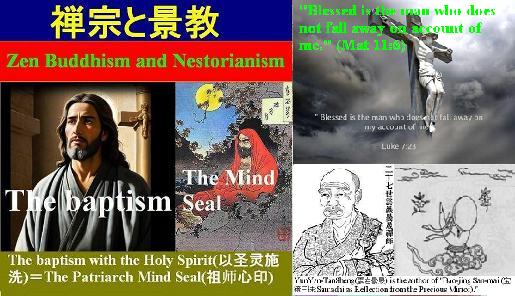
Jesus replied to the disciples of John the Baptist, "Go back and report to John what you hear and see: The blind receive sight, the lame walk, those who have leprosy are cured, the deaf hear, the dead are raised, and the good news is preached to the poor. Blessed is the man who does not fall away on account of me." (Mat 11:4-6)
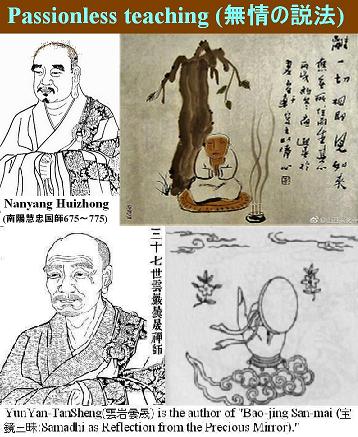
Passionless teaching
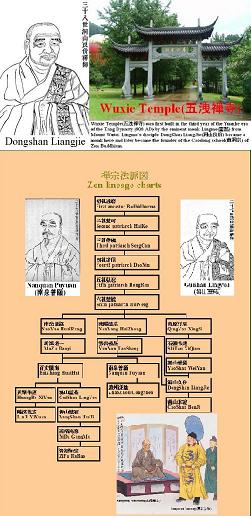
The founder of the Soto Zen School (曹洞宗), Zen Master DongShan LiangJie (洞山良价807-869), who had studied under Master LingMo (霊黙747-818) at Mount Wuxie (五洩山) of Zhejiang province (浙江省) and had been ordained at the age of twenty-one, journeyed on foot all over the country. He met Master Guishan(溈山771-853) after visiting Master NanQuan (南泉748-835).
LiangJie said to Guishan: "I have just heard that there is a way of teaching through passionlessness(無情説法), that is being practiced by the National Teacher NanYang HuiZhong (南陽慧忠675-775), but I have not yet understood its real meaning."
Guishan told him plainly its meaning, saying, "I teach it here too. However, I have not yet found the man to whom I can teach it."
But LiangJie did not understand and urged Guishan to tell him about it.
Then Guishan explained its meaning more kindly, "My mouth which was given me by my parents never dares to utter a word."
However, LiangJie still did not notice it and continued to ask, "Is there any one else besides you who has also devoted himself to this teaching?"
Guishan might have thought, "There is still somewhat good in this young man." He advised, "When you leave here and come to a place where there are stone chambers connected with each other, you will find there Master YunYan (雲岩742-841)."
Here this (遮個) is.
When LiangJie came to YunYan, he asked him: "What kind of man is able to hear the teaching of Dharma through passionlessness?"
YunYan replied: "It is one's own passionlessness which can hear the teaching of Dharma through passionlessness."
LiangJie asked: "Can you hear it?"
Master YunYan said: "If I can hear it, then you will not hear me teaching the Dharma."
LiangJie replied: "If this is so, it means that I do not hear you teaching the Dharma."
Master YunYan challenged him: "When I taught the Dharma, even you did not hear it. How can you expect to be taught by passionlessness."
Thereupon LiangJie composed a gatha, and presented it to YunYan: It is strange indeed! It is strange indeed! Dharma taught by passionlessness is beyond the imagination. Listening through your ear you cannot understand; But you will be aware of it by listening with your eyes.
After presenting the gatha, LiangJie asked leave of Master YunYan, who said to him: "Where are you going?"
LiangJie replied, "Although I am leaving you, I have no idea where my next stop will be." And Asked, "After you have passed away how can I answer someone if he wants me to describe what you were like?"
YunYan leaned his face closer to LiangJie and replied, "Here this(遮個) is."
LiangJie could not understand and kept silent for a while.
YunYan said to him again: "You must be very careful, as you are carrying this (遮個) great thing."
He is not other than myself
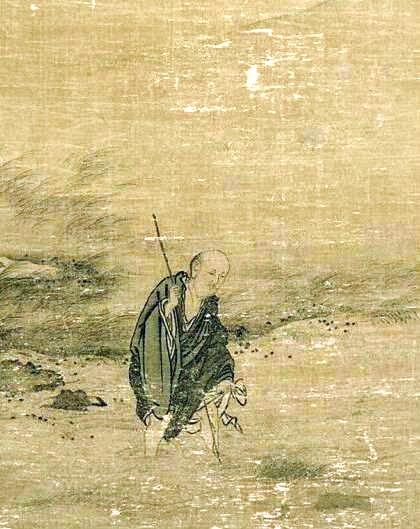
LiangJie was still puzzled. Later when he was crossing the water and saw his image reflected, he suddenly understood the teaching of YunYan. Thus he made the following gatha:
"You should not search it through others.
If you do, the Truth will become more remote from you.
But when alone I proceed through myself,
Every where I go I meet him (The Way/ The Truth).
Now, he is not other than myself;
Yet, I am not he.
Only if you understand this,
Will you identify with Tathata."
The way of Suchness
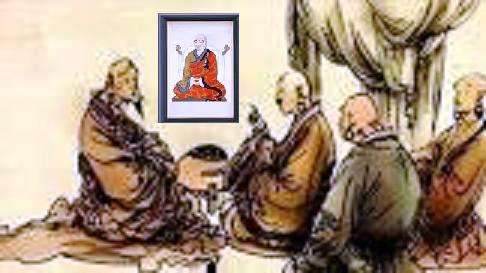
After a quite long period of time, one day, on the occasion of offering food to the portrait of Master YunYan, a monk asked Master LiangJie: "Is this (portrait) not what our late Master meant when he said that 'This is'? "
"Yes, it is!" Master LiangJie answered.
"What did 'This is' mean when Master YunYan said it?" asked the monk.
"I almost misunderstood him when he said it." replied the Master.
"I wonder whether the late Master knew the Truth." continued the monk.
"If he did not know it, he would have tried to tell the way of suchness (恁麼道). If he did know it, he would have only done suchness (恁麼道) inexpressibly."
Suchman (Inmo no hito)
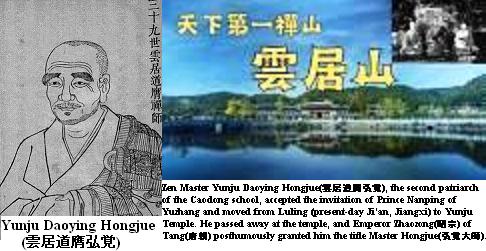
YunJuShan HongJue Dashi (雲居山弘覚大師853-902), one of Zen masters in Tang Dynasty of China, said, "If you wish to attain suchness ('inmo' in Japanese, 'nenme' in Hanyu Pinyin), you should be a suchman. If you have been a suchman, why should you afraid suchness?"
Unsurpassable enlightenment
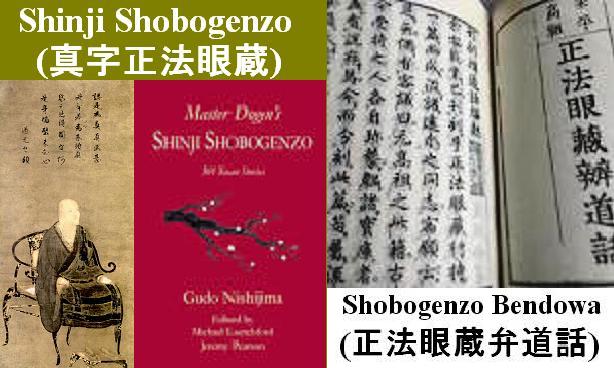
Dogen Zenji (道元禅師1200-1253), the founder of the Japanese Soto Zen School, in his book "Shobogenzo(正法眼蔵)" explains that HongJue Dashi tentatively described the unsurpassable enlightenment as 'inmo.'
According to his explanation, all things in Jinjippokai (尽十方界the world of ten directions: north, south, east, west, southeast, northeast, northwest, southwest and up and down) are embodiment of the unsurpassable enlightenment. The unsurpassable enlightenment cannot be contained in Jinjippokai and is overflowing from it. We are also part of Jinjippokai. We can recognize ourselves as 'inmo' because our bodies are manifested as objects in Jinjippokai. At that time, the body is already nonego, the life also flows in time and does not stop even for a moment. A rosy youth in the morning may become crumbling bones in the evening. One's words may flow from his heart. The change of heart is the way of the world. It is impossible to keep the mind.
But one may make up his mind to abandon his habit, enter the priesthood and try to listen the things never heard and testify the truth never testified before without reason. These do not come from him but from 'inmo.' Because he is a suchman (inmo no hito).
And one can recognize himself as suchman because he wishes to attain suchness. And once one can recognize himself as suchman, you need not to afraid suchness.
There are various 'inmo.' 'ShoShiki(声色sound and appearance)-inmo' as the object of perception, 'ShinShin(身心body and heart)-inmo' as the entity of perception and 'Shobutsu(諸仏Buddhas)-inmo' which sublates host and guest, etc.
Even if there are 'inmos' which cannot measure with scales of Buddha dhatu (sphere), dharma dhatu and form dhatu, you need not afraid it, Because you are already 'inmo no hito (suchman).' Then Dogen Zenji summarized, saying, "One, who fell down on the ground, does not doubt that he fell down on the ground when he stands up with his hand on the ground." 《正法眼蔵第十七恁麼Shobogenzo Chapter 17: Inmo》’
Turning the light inwards, illuminating the Self
Dogen Zenji also advices in his Scripture 《Fukan-zazengi (普勧坐禅儀The Way of Zazen Recommended to Everyone)》, "Originally, the Way (truth) is complete and universal. You need neither practice nor testimony. The Vehicle of Reality is in the Self. Why should we waste our efforts trying to attain it. - omit - Therefore cease studying words and following letters. Learn to withdraw, turning the light inwards, illuminating the Self. (Doing so), your body and mind will drop off naturally, and original-Self will become manifest. If you wish to attain suchness, practice suchness immediately."
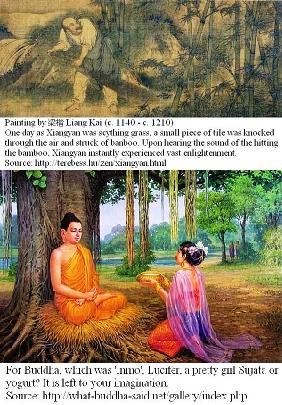
Chinese zen master Xiangyan(香厳), upon hearing the sound of the hitting the bamboo, instantly experienced vast enlightenment. In India, Buddha was enlightened upon seeing Lucifer while sitting under the bodhi tree and testified "Holy am I alone throughout heaven and earth. Grass, trees and the domains of all living things, all attain buddhahood." According to a legend, Buddha was enlightened upon eating yogurt given by Sujata. For Buddha, which was 'Inmo', Lucifer, a pretty girl Sujata or yogurt? It is left to your imagination.
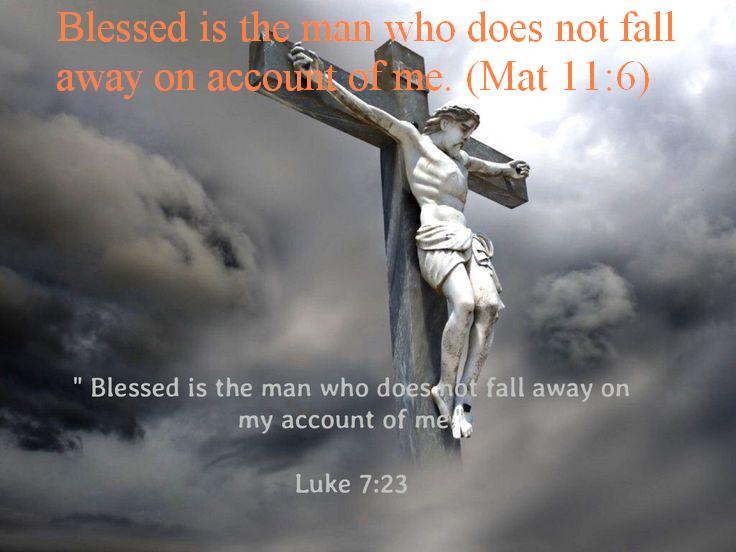
Blessed is the man who does not fall away on account of me
After Herod Antipas, the tetrarch of Galilee, had imprisoned John the Baptist at the fortress Machaerus near the Dead Sea, Jesus chose twelve disciples as his apostles and embarked on a systematic missionary activity. (Mat 10:1-42)
When John heard in prison what Christ was doing, he sent his disciples to ask him, Are you the one who was to come, or should we expect someone else? Jesus replied, Go back and report to John what you hear and see: The blind receive sight, the lame walk, those who have leprosy are cured, the deaf hear, the dead are raised, and the good news is preached to the poor. Blessed is the man who does not fall away on account of me. (Mat 11:2-6)
Jesus' Kingdom
As John's disciples were leaving, Jesus began to speak to the crowd about John: What did you go out into the desert to see? A reed swayed by the wind? If not, what did you go out to see? A man dressed in fine clothes? No, those who wear fine clothes are in kings' palaces. Then what did you go out to see? A prophet? Yes, I tell you, and more than a prophet. This is the one about whom it is written: 'I will send my messenger ahead of you, who will prepare your way before you.' I tell you the truth: Among those born of women there has not risen anyone greater than John the Baptist; yet he who is least in the kingdom of heaven is greater than he. From the days of John the Baptist until now, the kingdom of heaven has been forcefully advancing, and forceful men lay hold of it. For all the Prophets and the Law prophesied until John. And if you are willing to accept it, he is the Elijah who was to come. He who has ears, let him hear. (Mat 11:7-15)
Jesus made the people, who would live in his kingdom, known to us as the spiritual ones just as Jesus himself who was at the Father's side but was not born of a woman through describing John the Baptist as the greatest among those born of women; yet he who was least in the kingdom of heaven was greater than he. Jesus also warned that from the days of John the Baptist until then, the spiritual new kingdom had been forcefully advancing, and forceful men laid hold of it. This warning reflects not only the confrontation with Jewish radicals who accused the group of traitor, because they had escaped from Jerusalem before being surrounded by the Roman army but also the infighting between Hellenists and Hebraists which became manifest from the inception of Jerusalem Church's inauguration.
Rebuilding of the Gospel
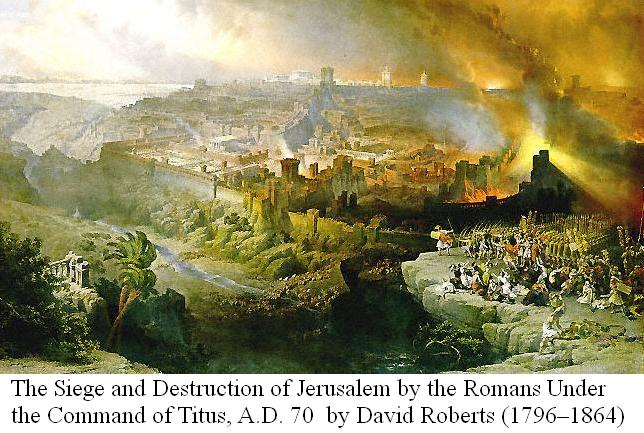
As a result of the first and the second Jewish war which occurred in AD 66 and 70 respectively, not only Jerusalem church disappeared but the temple and the city of Jerusalem itself were also completely destroyed. In the four Gospels of the New Testament, that were completed one after another after the Jewish war, seem to reflect how the different groups, which had led the early church movement, digested these setbacks.
These groups may have included the most of Hebraists of the Jerusalem Church who had led by Simon, the younger brother of James the Less, fled the city just before siege by Roman army and withdrawn to Pella, the Hellenists belonged to the Antioch Church which had been led by Barnabas and Mark, the group of the Gentile Church led by the Paul (who had already died at that time) and Luke, the group led by Peter who is said to have been executed in Rome around the same time of Paul's execution, the group led by John, the son of Zebedee, who is said to have been exiled to an isolated Island Patmos in the Aegean Sea and the Gnostic group represented by Thomas, Nathanael, Philip and perhaps Judas of Iscariot etc.
A new concept of the Jesus' Kingdom rebuilt by them can be seen in the above description of the Gospel of Matthew, which seems to have been compiled by the group that had taken refuge to Pella under the Herodian royal family.
The Spirit of truth
Gnosticism also impacted the Mahayana Buddhism movement in India. Especially, the baptism of the Holy Spirit appears not only to have blossomed as the cultures of Zen Buddhism in China and Japan after being having conveyed to India by Thomas but also to have contributed to the birth of Islam.
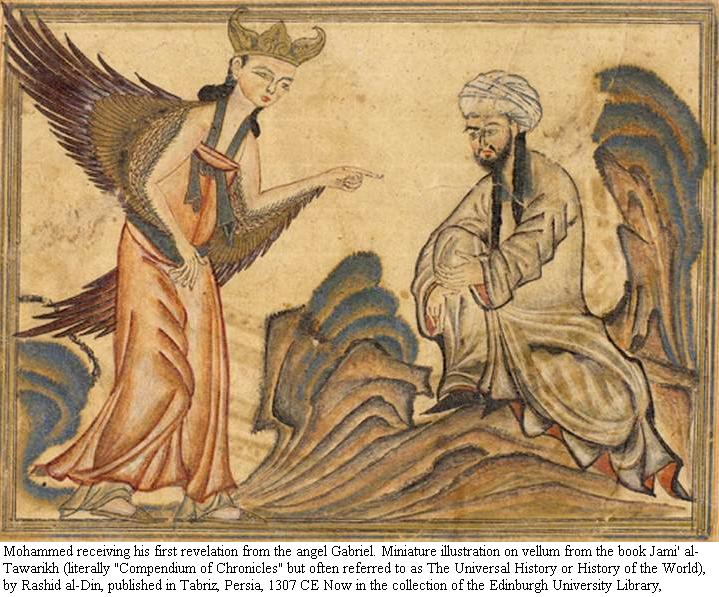
Muhammad is said to have been convinced that he was the prophet and the Spirit of truth whom the Deuteronomy and the Gospel of John have had predicted the emergence in the chapter 18 verse 15 and the chapter 14 verse 16 respectively and founded Islam. (Quran 7:157,61:6)
Mr. Pichai's proposal
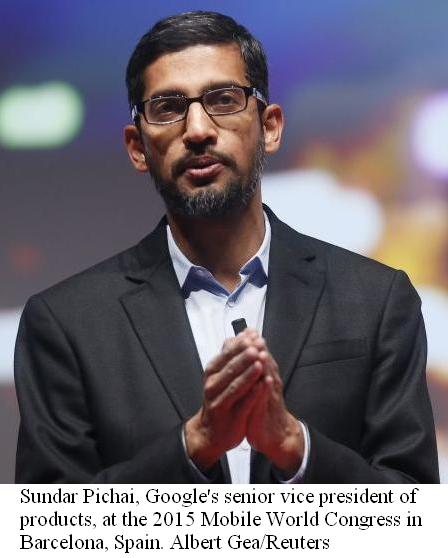
Google's India-born CEO Sundar Pichai, who had recently been picked for the top job by its founder Larry Page, last week waded into a hot-button political topic in the US of allowing Muslim immigrants into the country with an unequivocal statement that called for greater tolerance and open-mindedness. (SEAnews 2015-12-25 ArtNo.45592)
Mr. Pichai says on the blog; "I walk around the campus where I work and see a vibrant mix of races and cultures. Every one of those people has a different voice … a different perspective … a different story to tell. All of that makes our company an exciting and special place to be, and allows us to do great things together. We are urgently working to become much more diverse, because it's so important to our future success. I firmly believe that whether you're building a company or leading a country, a diverse mix of voices and backgrounds and experiences leads to better discussions, better decisions, and better outcomes for everyone. The open-mindedness, tolerance, and acceptance of new Americans is one of the country's greatest strengths and most defining characteristics."
He also says, "That is why it's so disheartening to see the intolerant discourse playing out in the news these days—statements that our country would be a better place without the voices, ideas and the contributions of certain groups of people, based solely on where they come from, or their religion." And he calls, "Let's not let fear defeat our values. We must support Muslim and other minority communities in the US and around the world."
Mr. Pichai seems to have realized that the campus of the universities of the United States had inherited the tide of Syncretism which had brought up Christianity, Mahayana Buddhism, Islam and Zen culture following the east expedition of Alexander the Great.(January 2, 2016)
[Reference]
《景徳伝灯録第十五巻摘录:The Transmission of the Lamp Chapter 15 Selections translated by Chang Chung-Yuan》
次参沩山问曰。顷闻忠国师有无情说法。良价未究其微。
After visiting Nanch'uan, Liang-chieh went to see Master Kuei-shan沩山 and said to him: "I have just heard that there is a way of teaching through passionlessness, that is being practiced by the National Teacher Nan-yang Hui-chung 南阳慧忠, but I have not yet understood its real meaning."
沩山曰。我遮里亦有。只是难得其人。
Kuei-shan replied: "I teach it here too. However, I have not yet found the man to whom I can teach it."
曰便请师道。
Liang-chieh then urged Kuei-shan to tell him about it.
沩山曰。父母所生口终不敢道。
Kuei-shan remarked: "My mouth which was given me by my parents never dares to utter a word."
曰还有与师同时慕道者否。
But Liang-chieh persisted: "Is there any one else besides you who has also devoted himself to this teaching?"
沩山曰。此去石室相连有云岩。若能拨草瞻风。必为子之所重。
Kuei-shan answered: When you leave here and come to a place where there are stone chambers connected with each other, you will find there Master Yun-yen. If you don't mind the hardship of climbing up there to visit him, he will be the man whom you will respect."
既到云岩问。无情说法什么人得闻。
When Liang-chieh came to Yun-yen, he asked him: "What kind of man is able to hear the teaching of Dharma 法through passionlessness?"
云岩曰。无情说法无情得闻。
Yun-yen replied: "It is one's own passionlessness which can hear the teaching of Dharma through passionlessness."
师曰。和尚闻否。
Liang-chieh asked: "Can you hear it?"
云岩曰。我若闻汝即不得闻吾说法也。
Master Yun-yen said: "If I can hear it, then you will not hear me teaching the Dharma."
曰若恁么即良价不闻和尚说法也。
Liang-chieh replied: "If this is so, it means that I do not hear you teaching the Dharma."
云岩曰。我说法汝尚不闻。何况无情说法也。
Master Yun-yen challenged him: "When I taught the Dharma, even you did not hear it. How can you expect to be taught by passionlessness."
师乃述偈呈云岩曰:也大奇、也大奇、无情解说不思议、若将耳听声不现、眼处闻声方可知。
Thereupon Liangchieh composed a gatha, and presented it to Yun-yen: It is strange indeed! It is strange indeed! Dharma taught by passionlessness is beyond the imagination. Listening through your ear you cannot understand; But you will be aware of it by listening with your eyes.
遂辞云岩。云岩曰。什么处去。
After presenting the gatha, Liang-chieh asked leave of Master Yun-yen, who said to him: "Where are you going?"
师曰。虽离和尚未卜所止。
"Although I am leaving you, I have no idea where my next stop will be." replied Liang-chieh.
又问云岩。和尚百年后忽有人问还貌得师真不。如何只对。
"After you have passed away how can I answer someone if he wants me to describe what you were like?"
云岩曰。但向伊道即遮个是。
"You just say to him, 'This is!'" Yun-yen replied.
师良久。
Liang-chieh kept silent for a while.
云岩曰。承当遮个事大须审细。
Yun-yen said to him again: "You must be very careful, as you are carrying this great thing."
师犹涉疑。后因过水影大悟前旨。因有一偈曰:
Liang-chieh was still puzzled. Later when he was crossing the water and saw his image reflected, he suddenly understood the teaching of Yun-yen. Thus he made the following gatha:
"You should not search it through others. If you do, the Truth will become more remote from you. But when alone I proceed through myself, Every where I go I meet him. Now, he is not other than myself; Yet, I am not he. Only if you understand this, Will you identify with Tathata."
他日因供养云岩真。有僧问曰。先师道只遮是莫便是否。
Another day, on the occasion of offering food to the portrait of Master Yun-yen, a monk asked Master Liang-chieh: "Is this (portrait) not what our late Master meant when he said that 'This is'? "
师曰是。
"Yes, it is!" Master Liang-chieh answered.
僧曰。意旨如何。
"What did 'This is' mean when Master Yun-yen said it?"
师曰。当时几错会先师语。
"I almost misunderstood him when he said it." replied the Master.
曰未审先师还知有也无。
"I wonder whether the late Master knew the Truth." continued the monk.
师曰。若不知有争解恁么道。若知有争肯恁么道。
"If he did not know it, how could he have known how to say it? If he did not know it, how could he have said it in such a way?" said Master Liangchieh.
师至唐大中末。于新丰山接诱学徒。厥后盛化豫章高安之洞山。
By the end of the period of Ta-chung大中(847-859), Master Liang-chieh received disciples and taught them at the Hsin-feng Mountain. After that his teachings were wide-spread at Tung-shan 洞山 in Kao-an 高安 of Yu-chang豫章.
因为云岩讳日营斋。有僧问。和尚于先师处得何指示。
One day, when the Master was conducting the annual memorial service for Master Yun-yen, a monk asked him: "What instruction did you receive from the late Master Yun-yen?"
师曰。虽在彼中不蒙他指示。
"Although I was there with him, he gave me no instruction." answered the Master.
僧曰。既不蒙指示。又用设斋作什么。
"Then why should you conduct the memorial service for him, if he did not instruct you?" further asked the monk.
师曰。然虽如此焉敢违背于他。
"Although this was the case, how could I disobey him?" explained the Master.
僧问。和尚初见南泉发迹。为什么与云岩设斋。
"You became known after you visited Nanch'uan. Why should you conduct the memorial service for Yun-yen?" pressed the monk.
师曰。我不重先师道德。亦不为佛法。只重不为我说破。又因设忌斋。
"It is neither for his moral character, nor for his teaching of Dharma that I respect him. What I consider to be important is that he never openly told me anything." stated the Master.
僧问。和尚为先师设斋、还肯先师也无。
Again the memorial service for Yun-yen caused a monk to raise a question: "Master! you conduct a memorial service for the late Master Yun-yen. Do you agree with what he has said to you?"
师曰。半肯半不肯。
"Half agree and half not!" replied the Master.
曰为什么不全肯。
"Why don't you entirely agree with him?" continued the monk.
师曰。若全肯即孤负先师也。
"If I entirely agreed with him, it would be ungrateful to him." replied the Master.
僧问。欲见和尚本来师如何得见。
A monk asked: "How can I see your original master?"
曰年涯相似即无阻矣。
"If two people both reach the ultimate, then there is no barrier of age between them." answered the Master.
僧再举所疑。师曰。不蹑前踪更请一问。
The monk tried asking about what still puzzled him. The Master said to him: "Do not trace the previous steps, but raise another question."
僧无对。云居代云。恁么即某甲不见和尚本来师也。
The monk made no answer. Yun-chu雲居, another disciple, replied for him: "According to what you say, I cannot see your original master."
The Master then continued: "Is there any one who does not show his gratitude to the 'Four Graces' and the 'Three Existences'." If he does not understand the meaning of these, how can he be free from the suffering of the beginning and ending of existence. Every thought he has in his mind should be free from attachment to things, and also every step he takes should be free from attachment to his dwelling place. When he keeps on in such a way without interruption, he will be close to the answer."
What is "Baptism with The Holy Spirit"?
According to the dialectic of the Gospel of John,
【Thesis】"A man can possess eternal life through accepting testimony of the Son of man and being baptized by him." (John 5:24)
【Anti-thesis】But "The one who comes from the earth cannot accept the testimony by one from heaven."(John 3:32)
How then can a man possess eternal life?
【Synthesis】"If you want to be baptized with the Holy Spirit, you can just go back to the word which was with God in the beginning (John 1:1) and certify that God is truthful. (John 3:33)"
When he said, "You are Huichao," Zen Master Fayan thrusted vivid Self in Huichao in front of his eyes.