《景徳伝灯録第十五巻摘录:The Transmission of the Lamp Chapter 15 Selections translated by Chang Chung-Yuan》
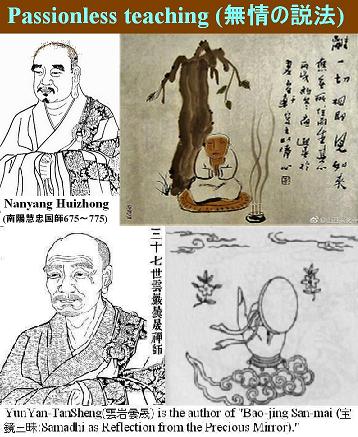
次参沩山问曰。顷闻忠国师有无情说法。良价未究其微。
After visiting Nanch'uan, Liang-chieh went to see Master Kuei-shan沩山 and said to him: "I have just heard that there is a way of teaching through passionlessness, that is being practiced by the National Teacher Nan-yang Hui-chung 南阳慧忠, but I have not yet understood its real meaning."
沩山曰。我遮里亦有。只是难得其人。
Kuei-shan replied: "I teach it here too. However, I have not yet found the man to whom I can teach it."
曰便请师道。
Liang-chieh then urged Kuei-shan to tell him about it.
沩山曰。父母所生口终不敢道。
Kuei-shan remarked: "My mouth which was given me by my parents never dares to utter a word."
曰还有与师同时慕道者否。
But Liang-chieh persisted: "Is there any one else besides you who has also devoted himself to this teaching?"
沩山曰。此去石室相连有云岩。若能拨草瞻风。必为子之所重。
Kuei-shan answered: When you leave here and come to a place where there are stone chambers connected with each other, you will find there Master Yun-yen. If you don't mind the hardship of climbing up there to visit him, he will be the man whom you will respect."
既到云岩问。无情说法什么人得闻。
When Liang-chieh came to Yun-yen, he asked him: "What kind of man is able to hear the teaching of Dharma 法through passionlessness?"
云岩曰。无情说法无情得闻。
Yun-yen replied: "It is one's own passionlessness which can hear the teaching of Dharma through passionlessness."
师曰。和尚闻否。
Liang-chieh asked: "Can you hear it?"
云岩曰。我若闻汝即不得闻吾说法也。
Master Yun-yen said: "If I can hear it, then you will not hear me teaching the Dharma."
曰若恁么即良价不闻和尚说法也。
Liang-chieh replied: "If this is so, it means that I do not hear you teaching the Dharma."
云岩曰。我说法汝尚不闻。何况无情说法也。
Master Yun-yen challenged him: "When I taught the Dharma, even you did not hear it. How can you expect to be taught by passionlessness."
师乃述偈呈云岩曰:也大奇、也大奇、无情解说不思议、若将耳听声不现、眼处闻声方可知。
Thereupon Liangchieh composed a gatha, and presented it to Yun-yen: It is strange indeed! It is strange indeed! Dharma taught by passionlessness is beyond the imagination. Listening through your ear you cannot understand; But you will be aware of it by listening with your eyes.
遂辞云岩。云岩曰。什么处去。
After presenting the gatha, Liang-chieh asked leave of Master Yun-yen, who said to him: "Where are you going?"
师曰。虽离和尚未卜所止。
"Although I am leaving you, I have no idea where my next stop will be." replied Liang-chieh.
又问云岩。和尚百年后忽有人问还貌得师真不。如何只对。
"After you have passed away how can I answer someone if he wants me to describe what you were like?"
云岩曰。但向伊道即遮个是。
"You just say to him, 'This is!'" Yun-yen replied.
师良久。
Liang-chieh kept silent for a while.
云岩曰。承当遮个事大须审细。
Yun-yen said to him again: "You must be very careful, as you are carrying this great thing."
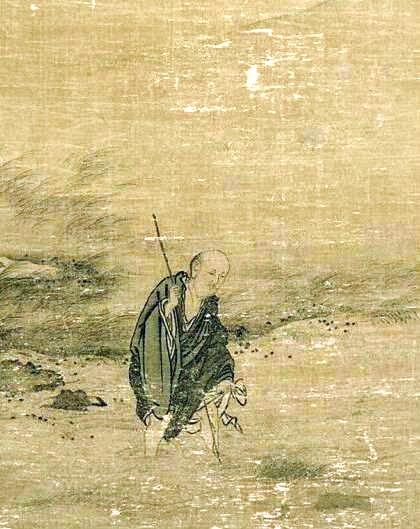
师犹涉疑。后因过水影大悟前旨。因有一偈曰:
Liang-chieh was still puzzled. Later when he was crossing the water and saw his image reflected, he suddenly understood the teaching of Yun-yen. Thus he made the following gatha:
"You should not search it through others. If you do, the Truth will become more remote from you. But when alone I proceed through myself, Every where I go I meet him. Now, he is not other than myself; Yet, I am not he. Only if you understand this, Will you identify with Tathata."
他日因供养云岩真。有僧问曰。先师道只遮是莫便是否。
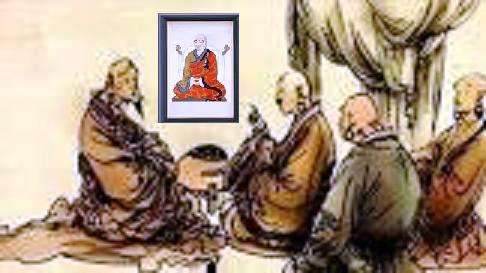
Another day, on the occasion of offering food to the portrait of Master Yun-yen, a monk asked Master Liang-chieh: "Is this (portrait) not what our late Master meant when he said that 'This is'? "
师曰是。
"Yes, it is!" Master Liang-chieh answered.
僧曰。意旨如何。
"What did 'This is' mean when Master Yun-yen said it?"
师曰。当时几错会先师语。
"I almost misunderstood him when he said it." replied the Master.
曰未审先师还知有也无。
"I wonder whether the late Master knew the Truth." continued the monk.
师曰。若不知有争解恁么道。若知有争肯恁么道。
"If he did not know it, how could he have known how to say it? If he did not know it, how could he have said it in such a way?" said Master Liangchieh.
师至唐大中末。于新丰山接诱学徒。厥后盛化豫章高安之洞山。
By the end of the period of Ta-chung大中(847-859), Master Liang-chieh received disciples and taught them at the Hsin-feng Mountain. After that his teachings were wide-spread at Tung-shan 洞山 in Kao-an 高安 of Yu-chang豫章.
因为云岩讳日营斋。有僧问。和尚于先师处得何指示。
One day, when the Master was conducting the annual memorial service for Master Yun-yen, a monk asked him: "What instruction did you receive from the late Master Yun-yen?"
师曰。虽在彼中不蒙他指示。
"Although I was there with him, he gave me no instruction." answered the Master.
僧曰。既不蒙指示。又用设斋作什么。
"Then why should you conduct the memorial service for him, if he did not instruct you?" further asked the monk.
师曰。然虽如此焉敢违背于他。
"Although this was the case, how could I disobey him?" explained the Master.
僧问。和尚初见南泉发迹。为什么与云岩设斋。
"You became known after you visited Nanch'uan. Why should you conduct the memorial service for Yun-yen?" pressed the monk.
师曰。我不重先师道德。亦不为佛法。只重不为我说破。又因设忌斋。
"It is neither for his moral character, nor for his teaching of Dharma that I respect him. What I consider to be important is that he never openly told me anything." stated the Master.
僧问。和尚为先师设斋、还肯先师也无。
Again the memorial service for Yun-yen caused a monk to raise a question: "Master! you conduct a memorial service for the late Master Yun-yen. Do you agree with what he has said to you?"
师曰。半肯半不肯。
"Half agree and half not!" replied the Master.
曰为什么不全肯。
"Why don't you entirely agree with him?" continued the monk.
师曰。若全肯即孤负先师也。
"If I entirely agreed with him, it would be ungrateful to him." replied the Master.
僧问。欲见和尚本来师如何得见。
A monk asked: "How can I see your original master?"
曰年涯相似即无阻矣。
"If two people both reach the ultimate, then there is no barrier of age between them." answered the Master.
僧再举所疑。师曰。不蹑前踪更请一问。
The monk tried asking about what still puzzled him. The Master said to him: "Do not trace the previous steps, but raise another question."
僧无对。云居代云。恁么即某甲不见和尚本来师也。
The monk made no answer. Yun-chu雲居, another disciple, replied for him: "According to what you say, I cannot see your original master."
The Master then continued: "Is there any one who does not show his gratitude to the 'Four Graces' and the 'Three Existences'." If he does not understand the meaning of these, how can he be free from the suffering of the beginning and ending of existence. Every thought he has in his mind should be free from attachment to things, and also every step he takes should be free from attachment to his dwelling place. When he keeps on in such a way without interruption, he will be close to the answer."