Zen Buddhism and Nestorianism Series 25:Guiding and Aiding Living Beings
<◆Zen Buddhism and Nestorianism Series 25:Guiding and Aiding Living Beings>
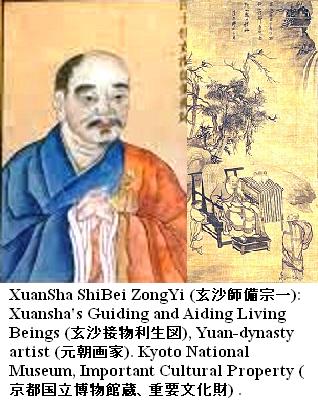
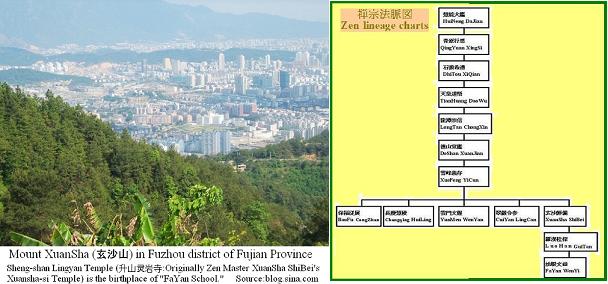
In the later period of the Tang Dynasty in China, Zen Master XuanSha(玄沙), who lived at Mount XuanSha in Fuzhou district of Fujian Province, one day delivered a sermon to the congregation and asked, "'Guiding and Aiding Living Beings (接物利生)' is said to be all Buddhists' long-cherished desire, but how do you guide if you encounter a person with triple handicap, blind, deaf and dumb? If you couldn't guide such people, then the Buddha Dharma has no effect."
This time, let's take a look at the koan (公案) of "The Blue Cliff Record(碧巌録) 88th Case: Guiding and Aiding Living Beings."
Guiding and Aiding Living Beings
In the later period of the Tang Dynasty and the five dynasties and ten kingdoms period (907-960) in China, Zen Master XuanSha ShiBei ZongYi (玄沙師備宗一835-908), who lived at Mount XuanSha in Fuzhou district of Fujian Province, one day delivered a sermon to the congregation and asked, "'Guiding and Aiding Living Beings (接物利生)' is said to be all Buddhists' long-cherished desire, but how do you guide if you encounter a person with triple handicap, blind, deaf and dumb? How do you guide him? The blind person can't see, even if you take up a gavel or raise a whisk. The deaf person can't hear, even if you talk glibly. The dumb person can't speak, even if you ask him to speak up. But how would you guide such people? If you couldn't guide such people, then the Buddha Dharma has no effect."
There is no need to say the exaggerated example such as a triple handicapped person. It is common for husbands and wives or parents and children, who eat and sleep together every day, can not communicate each other and it causes quarrel among them. More over, if people's denomination, nationality, race are different, might also happen armed disputes and international conflict.
The teachings of Yunmen
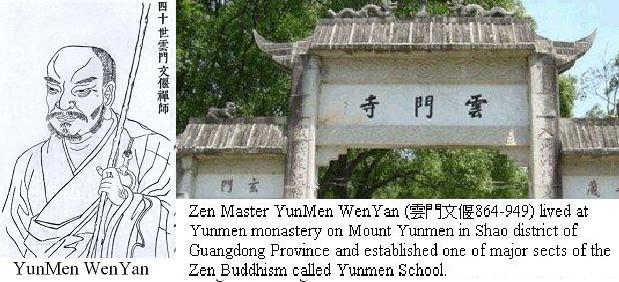
A monk, who listened to the XuanSha's preach but couldn't find answer to his question, visited another Zen Master YunMen WenYan (雲門文偃864-949), one of XuanSha's alumni, and asked instruction. Then YunMen said, "When you ask someone, you should bow to him first." When the monk bowed, YunMen poked his staff at him. When the monk drew back. YunMen said, "What, you can see it?" and urged "Come here." When the monk fearfully approached him, YunMen said "You can hear, too?!" and asked "How? Did you understand?" When the monk answered "No, I do not understand," YunMen said, "What, you are dumb, aren't you?" With that, the monk came to an insight.
For one who stands at the beginning and finds out Supreme God, who dwells in all creations, in other words, who finds out his original Self, it does not matter if he or she can communicate or get mutual understanding with others any more. Because he or she has become the holy one. So, he or she is just going through all the work that he or she should do now.
In order for God's work to be revealed
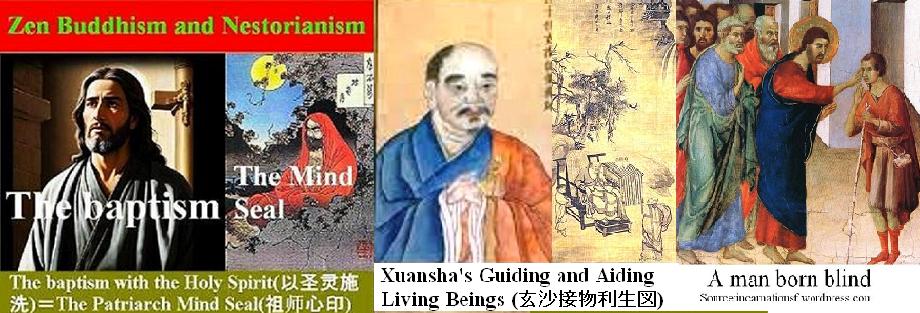
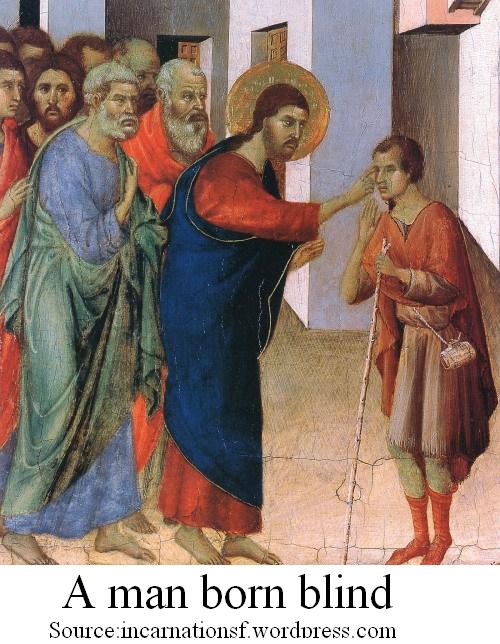
As Jesus was walking along, he saw a man who had been blind from birth. "Rabbi," his disciples asked him, "why was this man born blind? Was it because of his own sins or his parents' sins?" "It was not because of his sins or his parents' sins," Jesus answered. "This happened so the power of God could be seen in him." (John 9:1-3)
【thesis】 "A man can possess eternal life through accepting testimony of the Son of man and being baptized by him." (John 5:24)
【anti-thesis】 But "The one who comes from the earth cannot accept the testimony by one from heaven."(John 3:32)
How then can a man possess eternal life?
【synthesis】 "If you want to be baptized with the Holy Spirit, you can just go back to the word which was with God in the beginning (John 1:1) and certify that God is truthful. (John 3:33)"
When he said, "You are Huichao," Zen Master Fayan thrusted vivid Self in Huichao in front of his eyes. (The Origin of Christianity P.171)
《The Blue Cliff Record》 Guiding and Aiding Living Beings
【Pointer】
The established methods of our school are thus: they break two into three.
(垂示云:门庭施设,且恁么,破二作三。)
For profound talk entering into principle, you too must be piercing and penetrating.
(入理深谈,也须是七穿八穴,)
Taking charge of the situation, he hits home and smashes to pieces the golden chains and the hidden barrier.
(当机敲点,击碎金锁玄关。)
He acts according to the imperative, so that he obliterates all tracks and traces.
(据令而行,直得扫踪灭迹,)
Tell me, where is there confusion?
(旦道淆讹在什么处?)
For those who have the eye on their forehead, I bring this up to see.
(具顶门眼者,请试举看。)
【Case】
XuanSha(玄沙), teaching the community, said, "The old adepts everywhere all speak of guiding and aiding living beings. Supposing they encountered three kinds of sick person, how would they guide them? With a blind person, they could pick up the gavel or raise the whisk, but he wouldn't see. With a deaf person, he wouldn't hear the point of words. With a mute person, if they had him speak, he wouldn't be able to speak. But how would they guide such people? If they couldn't guide these people, then the Buddha Dharma has no effect."
A monk asked YunMen(雲門) for instruction on this. YunMen said, "Bow." The monk bowed and rose. YunMen poked at him with his staff; the monk drew back. YunMen said, "You're not blind." Then YunMen called him closer; when the monk approached, YunMen said, "You're not deaf." Next YunMen said, "Do you understand? " The monk said, "I don't understand." YunMen said, "You're not mute." At this the monk had an insight.
【Verse】
Blind, deaf, mute-
(盲聋喑哑)
Soundless, without any adjustments to potentialities.
(杳绝机宜)
In the heavens, on earth-
(天上天下)
Laughable, lamentable.
(堪笑堪悲)
Li Lou (離婁: a Chinese legendary figure with clairvoyance) can't discern the true form;
(离娄不辨正色)
How can Shi Kuang (師曠: a native blind musician in the Chinese Chunqiu dynasty) recognize the mystic tune!
(师旷岂识玄丝)
How can this compare to sitting alone beneath an empty window!
(争如独坐虚窗下)
The leaves fall, the flowers bloom-each in its own time.