Repentance from History
After Japan's relationship with Korea had become acrimonious, so it was the case with China. Though the crisis has already passed its peak, I would like to take this opportunity to review the history of Japan since the Meiji Restoration.
Japan, China and Korea's perspectives shown in their history textbooks
Japan, China and Korea have shared a common history in the Far East for just over one hundred years. During this time Japan has been the aggressor, whilst China and Korea have been the victims; for example in the Sino-Japanese War, the Russo-Japanese War and the Pacific War. As a result, Japan has tried, as far as possible, to play down its role as the aggressor, thereby countering China and Korea’s efforts to emphasize their roles as victims in school textbooks. Such divergent views have amplified the tension between Japan and its neighboring countries, including China and Korea.
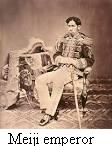
Following The Meiji Restoration, Japan rapidly became a modern state and successfully avoided being invaded by the great world powers of the time. Japan should be proud of this period in its history. In particular we should be proud of Emperor Meiji's Five Clauses of the Charter Oath, which were extremely forward thinking and democratic. Such ideals were, perhaps, fomented by the realization that internecine warfare was both futile and counterproductive, as it had led to the deaths of patriots belonging to the Imperial and pro Shogun factions.
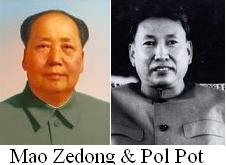
Saigo, Mao, Pol Pot
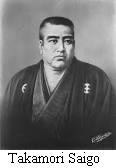
These ideals can be observed in the sayings and deeds of the famous imperialist leader Takamori Saigo. But it is to be regretted that such a philosophic man of integrity became an exponent for conquering Korea. However such a regrettable phenomenon is not confined to Japan. We have heard that Mao Zedong, the great Chinese leader, sacrificed huge numbers of his own people when attempting to modernize China; for example during The Great Leap Forward (1958-1960) and The Cultural Revolution (1966-1976). Nevertheless Mao is still honored as a great leader in China. In contrast, the fate of Pol Pot, Cambodia's Red Revolutionary hero, was tragic.
Hideki Tojo and Hitler's Leaven
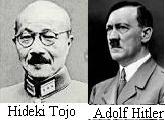
To confess and repent for errors committed in the past does not mean that we should convict people such as Hideki Tojo or Adolf Hitler as war criminals and erase their names from history. The same evil impulses which existed in their hearts may likewise exist in our hearts. If we do not identify the reasons that caused these people, who had genius, religious beliefs and lofty ideals, to commit such deadly sins, we may also one day make the same mistakes.
Yasukuni Shrine is a place to reflect on history
The Yasukuni Shrine was originally established for worshiping the spirits of patriots who died during The Meiji Restoration. If we designate this shrine as a place to swear to inherit both assets and debits from our forefathers, reviewing both the positive and negative aspects of our history since The Meiji Restoration and to renew the pledge to maintain peace then China, Korea and other neighboring countries may come to understand.
True reflections aufheben territorial disputes in the world
If we actually confess and repent for the errors committed during our history and identify the ‘yeast’ which led to them, not only could we resolve the issue of sovereignty over Takeshima Island and the Senkaku Islands, but also the relationship issues between North and South Korea, Taiwan and mainland China and even the conflicts in the Middle East. At least we can light a beacon of hope for the future. (Eko-an-Hensho-koji 2005/04/27)
[Reference]
Oath in Five Articles
1. Deliberative assemblies shall be established widely. All governmental resolutions shall be based on and in accordance with public opinion.
2. All classes, high and low, shall be united in one accord vigorously when executing State affairs.
3. All common people, no less than the civil and military officials, shall be allowed to fulfill their just desires, so that there may not be any discontent among them.
4. All old absurd practices shall be abolished and be replaced with equity and justice of Heaven and Earth, as the basis of all actions.
5. Wisdom and knowledge shall be widely sought after throughout the world for the purpose of promoting the welfare of the Empire.
Takamori Saigo (1827-1877)
Takamori Saigo was born the eldest son of a lower-ranking samurai family on Feb. 7, 1827, in Kagoshima, the castle town of Satsuma province.
He was said to have shown determination, a warm heart and willingness to learn from others from an early age.
As a youth, he showed much interest in both Wang Yang-ming Confucianism and Zen Buddhism, both of which emphasized the importance of acting on individual conscience.
Saigo was one of the principal leaders responsible for the overthrow of the Tokugawa Shogunate.
He helped set in motion the forces that led to the Meiji Restoration, which restored direct imperial rule to Japan under the Meiji emperor, Mutsuhito.
He was an imperial adviser in the new government. In 1873, he advocated war with Korea in order to relieve lower-ranking samurais who had become poorer during the Meiji restoration.
When his advice was rejected, he and a group of dissidents retired from the government.
He eventually revolted against the Meiji government in 1877, but he and his followers were defeated by imperial troops and Saigo committed suicide.
Hideki Tojo
Hideki Tojo, born in 1884 in Tokyo, was Prime Minister of Japan during the attack on Pearl Harbor, plunging the Far East into a war which was to end with the destruction of Hiroshima in August 1945.
For his part in leading Japan into World War Two, Tojo was executed as a war criminal.
(http://www.historylearningsite.co.uk/hideki_tojo.htm)
Yeast
“How is it you don't understand that I was not talking to you about bread? But be on your guard against the yeast of the Pharisees and Sadducees.” (Matt 16-11)
Former Prime Minister Hatoyama's comments on the Senkaku Islands
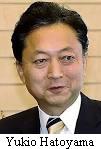
During an interview with Hong Kong's Phoenix Television, which was broadcasted on 25th Jun 2013 and at the venue of the World Peace Forum (WPF), which was hosted by Tsinghua Univeristy in Beijing on the 27th Jun, Japanese former Prime Minister Yukio Hatoyama commented on the Senkaku Islands' issue and expressed his view as follows:
①It is natural for both countries, Japan and China, to think the islets are theirs.(Both sides have valid arguments)
②The 1943 Cairo Declaration required Japan to return all territories it took from China. In the 1945 Potsdam Declaration, which spelled out the terms of Japan's surrender in World War II, Japan promised to follow the Cairo Declaration. Therefore it is understandable for China to think that the Senkaku Islands are among these territories which Japan should return to China.
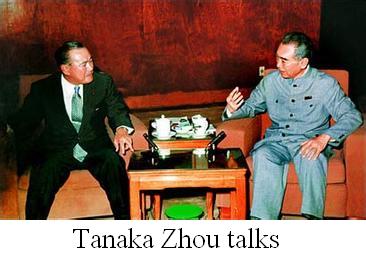
③When Japan and China resumed diplomatic relations in 1972, Japanese Prime Minister Kakuei Tanaka and Chinese Premier Zhou En-lai agreed to shelve the Senkaku issue.
④ If the pigheaded attitude of the Japanese government continues, an improvement of Sino-Japanese relations cannot be expected.
Tanaka Zhou talks
(Excerpts from AJW INTERVIEW: China-watcher Yabuki says the Senkakus are a diplomatic mistake by Japan December 12, 2012)
The current row over the Senkaku Islands traces its roots to the four meetings between Prime Minister Kakuei Tanaka and Chinese Premier Zhou En-lai in September 1972, which set the terms for the normalization of diplomatic ties.
According to The Japanese Foreign Ministry's record, Tanaka raised the Senkaku issue at the third Tanaka-Zhou meeting on Sept. 27. Zhou responded by saying that it should be "shelved," as the two countries could gain nothing from getting embroiled in the territorial issue in their talks.
Tanaka's response was not on the record. However, the memoir of a Chinese diplomat, Zhang Xiangshan, an adviser to Zhou who attended the summit talks, says Tanaka made comments four times and effectively acknowledged the territorial problem and agreed to shelve it.
Japanese diplomat Hiroshi Hashimoto, then chief of the Foreign Ministry's China division, also admitted in his memoir in 2000 that Tanaka agreed with Zhou to discuss the Senkaku issue "at a future opportunity."
What is "Baptism with The Holy Spirit"?
According to the dialectic of the Gospel of John,
【thesis】 "A man can possess eternal life through accepting testimony of the Son of man and being baptized by him." (John 5:24)
【anti-thesis】 But "The one who comes from the earth cannot accept the testimony by one from heaven."(John 3:32)
How then can a man possess eternal life?
【synthesis】 "If you want to be baptized with the Holy Spirit, you can just go back to the word which was with God in the beginning (John 1:1) and certify that God is truthful. (John 3:33)"
When he said, "You are Huichao," Zen Master Fayan thrusted vivid Self in Huichao in front of his eyes. (The Origin of Christianity P.171)
Purchase here
Your Comments / Unsubscribe
SEAnewsFacebook
SEAnewsGoogle
SEAnews eBookstore(Google)