Practice and enlightenment are one
Penance, practice and salvation are the Trinity
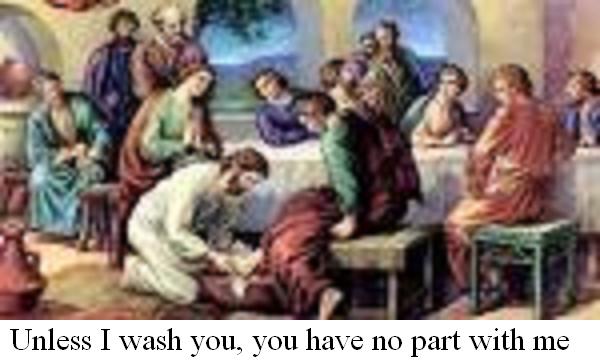
Jesus showed that repentance, practice and consolation were indivisible through his entire life. He asked his disciples to live their lives in the same way by following his example. But they do not seem to have really understood what Jesus wanted. After washing their feet, Jesus said "I have given you an example to follow. Do as I have done to you." (John 13:15)
Jesus also said to The Twelve Apostles at the Last Supper, "You know the way to the place where I am going." (John 14:4) But Thomas said to him, “Lord, we don't know where you are going, so how can we know the way?”
Jesus answered, “I am the way and the truth and the life. No one comes to the Father except through me. If you really knew me, you would know my Father as well. From now on, you do know him and have seen him.”
Philip said, “Lord, show us the Father and that will be enough for us.”
Jesus answered: “Don't you know me, Philip, even after I have been among you such a long time? Anyone who has seen me has seen the Father. How can you say, Show us the Father? Don't you believe that I am in the Father, and that the Father is in me? The words I say to you are not just my own. Rather, it is the Father, living in me, who is doing his work. Believe me when I say that I am in the Father and the Father is in me; or at least believe on the evidence of the miracles themselves.”(John 14:5-11)
The Spirit of truth is in you
“And I will ask the Father, and he will give you another Counselor to be with you forever— the Spirit of truth. The world cannot accept him, because it neither sees him nor knows him. But you know him, for he lives with you and will be in you.” (John 14:16-17)
Jesus seems to have encouraged his disciples to understand that the way was within them-selves and that if they continued to live their lives according to his teachings and example he would be with them always.
Body is the bodhi tree, heart is like a standing mirror bright.
Hongren (602-675), the fifth patriarch after Bodhidharma and one of the most famous Chinese Zen priest during the Tang Dynasty (618-907), one day told all his disciples to write a gatha (poem) on the temple southern passage wall, for him to chose the sixth patriarch.
Venerable Shenxiu (605-706), the head monk, soon wrote a gatha for Hongren, which read: “Body is the bodhi tree; heart is like a standing mirror bright. Strive to polish it constantly and let no dust alight.”
Hongren told the rest of his disciples, "Light incense, pay respect to this gatha and practice according to this gatha." However, privately, Hongren told Shenxiu, "You have arrived at the gate, but haven't entered." Hongren asked Shenxiu to compose another gatha that demonstrated a true understanding.
Since Nothing's There Initially, Where Does the Dust Alight?
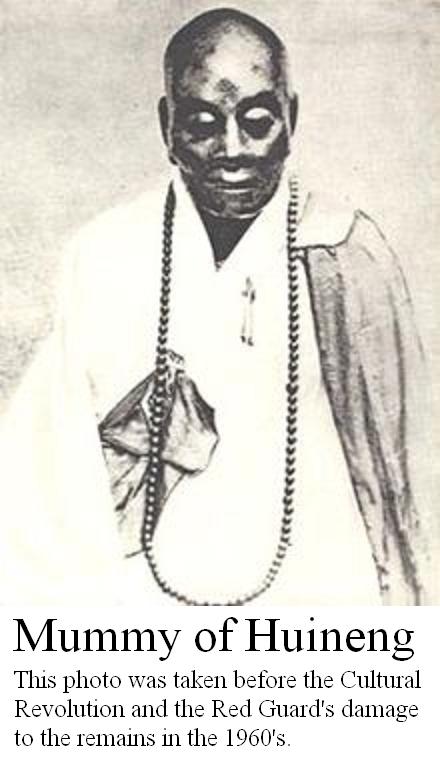
While Shenxiu was still thinking about his second verse, Huineng (638-713), a young illiterate novice working for the rice mill in the temple, composed a gatha and had it written on the wall next to Shenxiu's, It read as follows: “Bodhi is no tree, nor standing mirror bright. Since nothing's there initially, where does the dust alight?”
When Hongren came and saw it, he was very impressed. However he just said casually, "This hasn't seen the essential nature either," and proceeded to wipe the gatha off. But from then on Hongren received Huineng in his abode and expounded the Diamond Sutra to him. Hongren, having finished Huineng’s intensive training, gave him a robe and begging bowl as symbols of the Dharma Seal of Sudden Enlightenment and ordered him to flee south in order to avoid the envy of others.
Subitism and gradualism are both sides of the same coin
Thereafter ‘Northern Chan’ Buddhism succeeded the doctrines of Shenxiu's ‘gradualism’ and ‘Southern Chan’ Buddhism succeeded the doctrines of Huineng's ‘subitism’. Both schools flourished in China.
Shenxiu and Huineng's gathas were both sides of the same coin and referred to the same enlightenment. Therefore Hongren was just in his dealings. There is no difference between the enlightenment of the northern and southern Chans. There is always only one Sudden enlightenment. But even after enlightenment, one will still suffer from worldly desires and will need to polish the mirror in his heart constantly in order that ‘no dust alights thereon’. Without practice and diligence there can never be enlightenment.
Buddha-nature cannot appear without practice or live it without enlightenment
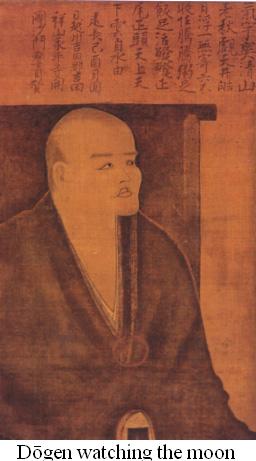
The Japanese Monk Master Dogen Zenji (1200-1253) said, "Though each man has Buddha-nature in abundance, he cannot make it appear without practice or live it without enlightenment." and also said "Practice and enlightenment are not two but one." (Bendowa)
Sengzhao, who was known as one of the four Sages among Kumaarajiiva's (350-409) three thousand students and the best ‘emptiness’ theoretician, said in his book “Zhaolun Niepanwuminglun”, Chapter 4, "The true way is in the complete enlightenment, and the complete enlightenment is in the bare truth. If you have got the bare truth, you would see both presence and absence. If you see both presence and absence, there is no difference between the other and you. Therefore heaven, earth, and I have the same root and myriad things and I are one body.”
Repent in the bare truth
If a Japanese, who visits the Yasukuni shrine, is truly repentant he will sign the guestbook in the mail hall of the shrine without hesitation. If he hesitates his reason for visiting may not be the ‘bare truth’. It cannot be helped if doubt among neighboring countries arises. (Eko-an Hensho-koji 2005/12/27)
What is "Baptism with The Holy Spirit"?
According to the dialectic of the Gospel of John,
【thesis】 "A man can possess eternal life through accepting testimony of the Son of man and being baptized by him." (John 5:24)
【anti-thesis】 But "The one who comes from the earth cannot accept the testimony by one from heaven."(John 3:32)
How then can a man possess eternal life?
【synthesis】 "If you want to be baptized with the Holy Spirit, you can just go back to the word which was with God in the beginning (John 1:1) and certify that God is truthful. (John 3:33)"
When he said, "You are Huichao," Zen Master Fayan thrusted vivid Self in Huichao in front of his eyes. (The Origin of Christianity P.171)
Purchase here
Your Comments / Unsubscribe
SEAnewsFacebook
SEAnewsGoogle
SEAnews eBookstore(Google)